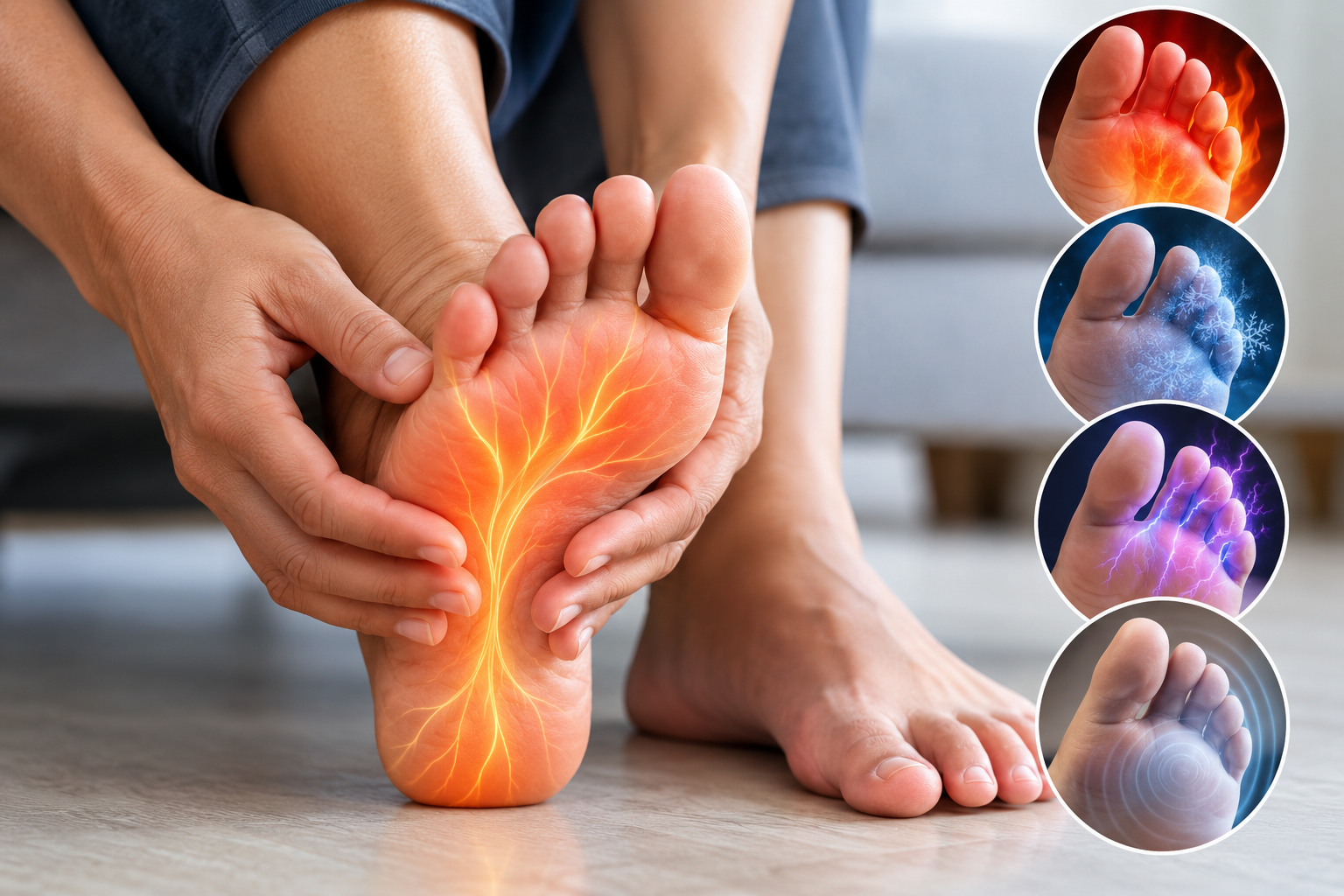
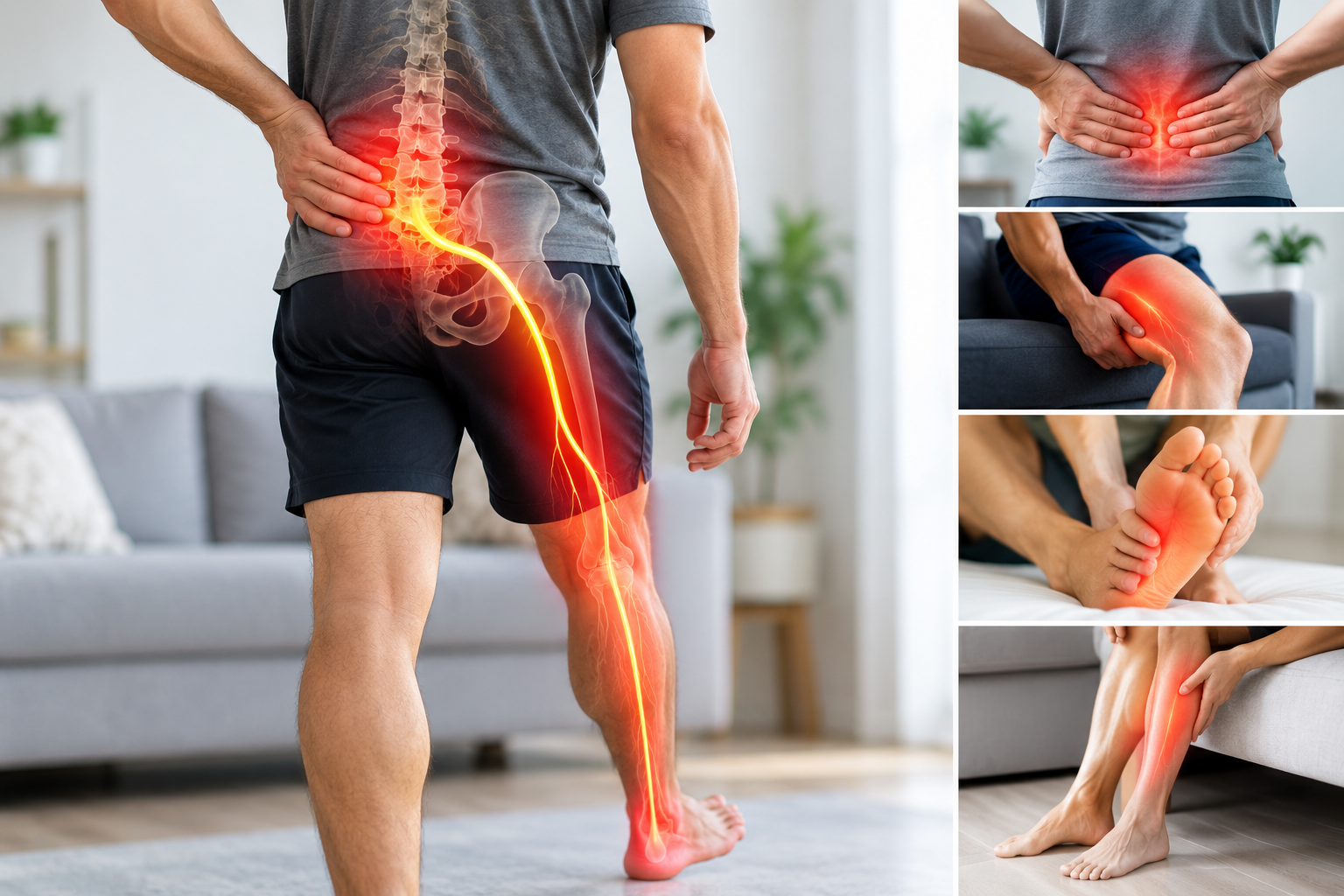
Lower back pain and sciatica can feel similar at first, but the pattern often provides better clues than the pain level. General lower back pain may stay around the lumbar area and feel sore, stiff, tight, or sharply painful with certain movements. Sciatica is more likely to cause symptoms that travel from the lower back or buttock into the leg. Burning, tingling, numbness, or an electric-like feeling may appear along that path.
That difference matters because lower back pain is a broad symptom with many possible causes, while sciatica describes nerve-related pain that follows the path of the sciatic nerve. Someone can even have sciatica without severe back pain. Looking at where the discomfort travels, what the sensation feels like, and whether strength or feeling has changed can help separate the two patterns before a professional evaluation.
Start With the Direction of the Pain
One of the most useful clues is not simply where the pain starts, but where it goes. General lower back pain often stays around the lumbar region. It may spread across the back or into nearby muscles, but the main discomfort remains relatively local.
Sciatica often follows a more recognizable path. Pain may begin in the lower back or buttock, continue through the back or side of the thigh, and reach the calf, foot, or toes. Mayo Clinic notes that sciatica commonly travels from the lower back through the buttock and down the leg and may feel burning, sharp, or electric. Tingling, numbness, or weakness may occur as well.
Typical Lower Back Pain Path
Lower spine
↓
Across the lower back
↓
May spread into nearby muscles
↓
Usually remains mainly around the back
Typical Sciatica Path
Lower back or buttock
↓
Back or side of the thigh
↓
Calf or lower leg
↓
May continue into the foot or toes
This does not mean every case follows the same route. Someone with sciatica may feel relatively little pain in the back and much stronger symptoms in the buttock or leg. The path is a clue, not a diagnosis.
FHCC’s back pain treatment in Lexington, KY page covers both localized back discomfort and symptoms associated with sciatica, including burning, tingling, numbness, and pain extending into the leg.
Lower Back Pain and Sciatica Side by Side
The easiest way to understand the difference is to compare the overall symptom pattern rather than one isolated complaint.
| What You Notice | General Lower Back Pain | Sciatica Pattern |
| Main location | Lower lumbar area | Buttock and leg, sometimes with back pain |
| Common feeling | Aching, soreness, stiffness, local sharp pain | Burning, shooting, electric, radiating |
| Pain travels down leg | Less typical | Common |
| Tingling | Less typical with simple muscular pain | Can occur |
| Numbness | Less typical with a simple strain | Can affect the leg, foot, or toes |
| One-sided symptoms | Can vary | Often affects one side |
| Weakness | Not typical of simple muscle soreness | Can occur with nerve involvement |
| Sitting | May or may not affect it | Prolonged sitting can aggravate symptoms |
Pain intensity does not settle the question. A strained or irritated back muscle can hurt badly without involving a nerve. On the other hand, someone may have moderate pain with numbness or weakness that deserves closer attention because nerve function may be involved.
The combination of traveling pain plus changes in sensation is usually more informative than simply rating discomfort from 1 to 10.
Back Pain Is Common, but the Pattern Still Matters
Back pain becomes more common with age, which makes it even more important not to assume that every back complaint has the same cause. In the CDC’s 2019 National Health Interview Survey, 28.4% of U.S. adults ages 18–29 reported back pain during the previous three months. That increased to 35.2% among ages 30–44, 44.3% among ages 45–64, and 45.6% among adults 65 and older. These figures describe back pain overall, not sciatica specifically.
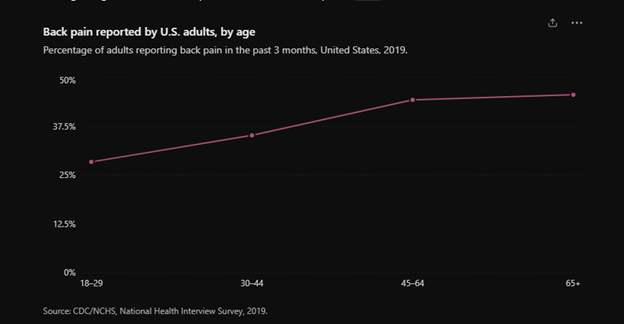
The graph is useful for context, but it should not be used to judge an individual’s symptoms. Age does not tell someone whether they have sciatica. The direction of pain, changes in sensation, weakness, medical history, and examination findings are far more useful for that distinction.
This is also why someone should avoid thinking, “Back pain is common at my age, so I should just ignore it.” A familiar symptom can still deserve attention when the pattern changes.
Look Beyond Pain to Tingling, Numbness, and Weakness
Sciatica becomes more likely when back or buttock pain is accompanied by nerve-type symptoms in the leg. Someone might describe a burning line down the thigh, pins and needles in the calf, numbness in part of the foot, or a leg that suddenly feels less strong than usual. Mayo Clinic notes that sciatica can range from a mild ache to sharp, burning, or electric pain. Symptoms can become worse with coughing, sneezing, or prolonged sitting, and some people experience tingling, numbness, or muscle weakness in the affected leg or foot.
Lower back pain without these nerve-related changes may fit a different pattern. For example, soreness after lifting, repeated bending, a sudden movement, or unfamiliar physical activity may remain centered around the lower spine and surrounding muscles. That does not automatically make the problem minor, but it provides a different clue.
FHCC also provides information about chronic pain care in Lexington for people whose discomfort continues over time or affects sleep, movement, and daily activities.
A Few Common Assumptions Can Blur the Difference
Common Terms For Sciatica And Lower Back Pain
The word “sciatica” is often used as a general label for almost any back-and-leg pain, but that can make symptoms harder to describe accurately. Someone may assume severe pain means serious nerve damage, while another person may dismiss mild numbness because it does not hurt much. Neither assumption reliably identifies what is happening.
Pain Patterns
Another common belief is that sciatica must always start with strong back pain. It does not. For some people, the most noticeable discomfort is in the buttock, thigh, calf, or foot. The opposite mistake is assuming that all leg pain is sciatica. Other musculoskeletal and nerve problems can create overlapping patterns.
Imaging Myths About Sciatica And Back Pain
Imaging can also cause confusion. People sometimes expect an MRI immediately when lower back pain appears. Current American Academy of Family Physicians guidance states that most people with acute low back pain do not require routine imaging unless the history or examination reveals findings that raise concern for a specific or serious cause.
Stay Active
The same guidance emphasizes maintaining reasonable activity for many cases of nonspecific acute low back pain rather than routinely relying on prolonged bed rest. The appropriate activity level still depends on the person’s symptoms and medical situation.
What a Provider May Check Before Calling It Sciatica
A useful back-pain evaluation looks at much more than the spot that hurts. A healthcare professional may ask where the problem began, whether symptoms travel below the knee, whether one side is affected more than the other, and whether sitting, walking, coughing, or certain movements change the discomfort.
Strength, sensation, reflexes, posture, and walking may also provide clues. Certain controlled movements can help determine whether symptoms behave like nerve-related pain. Imaging or additional testing may then be considered if the history, examination, persistent symptoms, trauma, or other findings make it appropriate.
The goal is to work out whether the symptoms appear more consistent with a muscle or joint problem, nerve irritation, another spinal condition, or something outside the spine. That is why describing the pattern clearly can be more useful than simply arriving at an appointment with a self-diagnosis of “sciatica.”
Use This Checklist Before Your Appointment
A short symptom record can help you explain what has actually been happening. Try to notice these details rather than focusing only on the pain score.
Back Pain vs Sciatica Checklist
☐ Where did the pain first begin?
☐ Does it stay mainly in the lower back?
☐ Does it move into the buttock?
☐ Does it continue through the thigh or calf?
☐ Does it reach the foot or toes?
☐ Is one leg affected more than the other?
☐ Does the pain feel aching, burning, shooting, electric, or sharp?
☐ Is there numbness or tingling?
☐ Does the leg or foot feel weaker?
☐ Does sitting make symptoms worse?
☐ Does coughing or sneezing change the pain?
☐ Does walking improve or worsen it?
☐ How long has the problem lasted?
☐ Is the pattern changing or becoming more frequent?
The checklist is not a diagnostic tool. Its purpose is to turn a vague statement such as “my back hurts” into useful information about location, direction, sensation, triggers, and changes over time.
How can I tell whether my lower back pain is sciatica?
Sciatica becomes more likely when pain travels from the lower back or buttock into one leg and occurs with burning, tingling, numbness, or weakness. Pain that remains mainly around the lower back without nerve-related symptoms may follow a different pattern.
Can I have sciatica without much lower back pain?
Yes. Some people feel their strongest symptoms in the buttock, thigh, calf, foot, or toes. Lower back discomfort may be mild compared with the symptoms farther down the leg.
Does sciatica always travel below the knee?
No. Symptoms can stop higher in the leg. However, pain, tingling, or numbness extending into the calf, foot, or toes can add useful information when nerve irritation is suspected.
Does tingling in my leg automatically mean sciatica?
No. Sciatica can cause tingling, but other nerve and musculoskeletal conditions can create similar sensations. The entire symptom pattern and physical examination matter.
Can ordinary lower back pain be very severe?
Yes. The intensity of pain alone does not distinguish muscle or joint-related back pain from sciatica. The direction of symptoms and changes in sensation or strength can provide more useful clues.
Do I need an MRI to find out whether I have sciatica?
Not necessarily. Most acute lower back pain does not automatically require imaging. A healthcare professional may first use medical history and physical examination before deciding whether imaging or additional tests are appropriate.
When should lower back pain or sciatica be treated as urgent?
Sudden leg weakness or numbness, trouble controlling the bowel or bladder, or severe pain after a significant injury can require immediate medical evaluation.
Freedom Health Care Center provides back pain and sciatica care in Lexington, KY for people dealing with localized back discomfort, radiating symptoms, movement limitations, and related concerns. Its service approach considers the way symptoms affect sitting, standing, walking, and everyday activity rather than treating every back-pain pattern as identical.